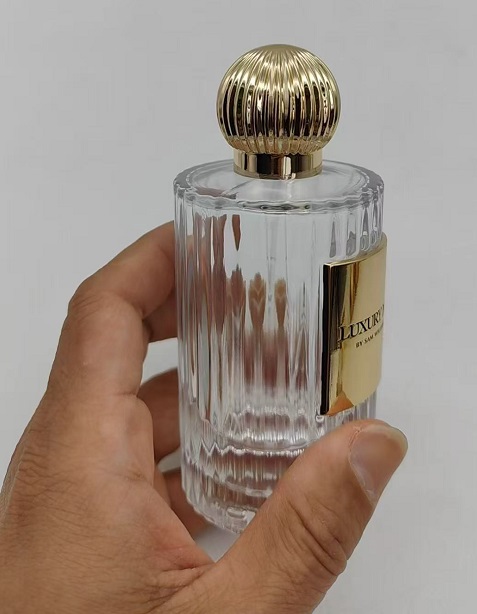
How to diminish the parting lines on the perfume caps
The main and core method is the mold making.
1. Precise Fitting of Parting Surfaces (Core Solution to Minimize Parting Lines)
Mirror-polish the parting surfaces and perform red lead mold fitting to achieve a fitting rate of ≥95%, eliminating flash caused by partial gaps. Grind and repair any dents or indentations immediately upon discovery.
Separate vent slots from the sealing section of parting surfaces. Strictly control vent depth for the sealing zone: ≤0.025 mm for ABS plastic molding, ≤0.015 mm for zinc alloy die casting. Excessively deep vents will continuously generate heavy flash and prominent parting lines.
Clean residual plastic, zinc slag and carbon deposits on parting surfaces regularly. Even tiny contaminants will prop open gaps and create visible lines.
2. Optimization of Gating and Venting
Position gates away from visible parting lines and adjust melt flow paths to prevent deep weld lines formed by converging melt streams on cosmetic surfaces. For high-end products, use valve-gated hot runners with sequential injection to stagger melt convergence points.
Add overflow wells and concentrated venting at the end of parting lines to discharge cold front melt and trapped air into scrap zones. This results in thinner parting lines without dark sink marks.
For high-gloss perfume caps, rapid heat cycle molding (RHCM) or breathable steel inserts are recommended to improve melt fusion and drastically reduce weld lines.
3. Control of Mold Clearance
Maintain parting clearance at 0.005–0.01 mm for plastic injection molds; keep parting clearance ≤0.008 mm for zinc alloy die casting molds. Larger clearance creates thicker, harder-to-polish parting lines.